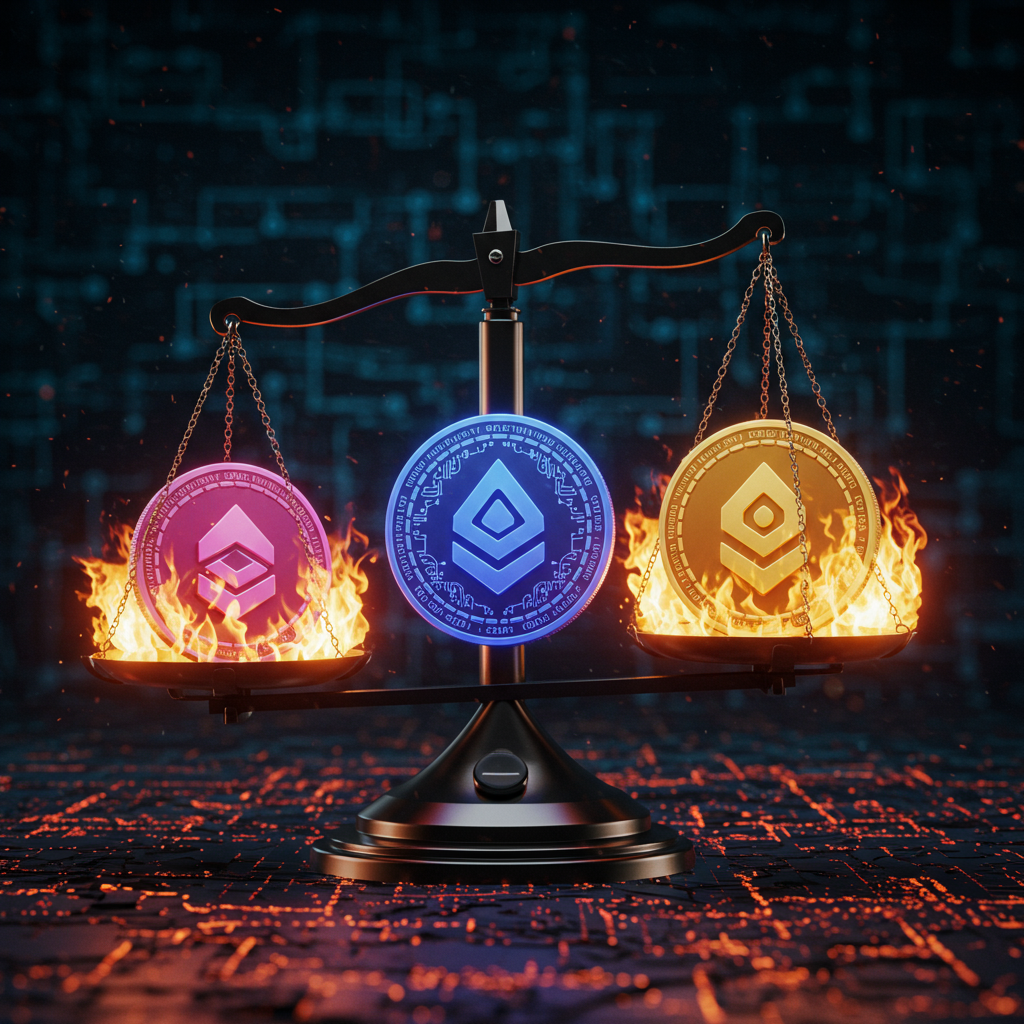
Token Burn Economics: BNB vs LUNC vs SHIB
What is Token Burn?
Token burn is when a cryptocurrency removes some of its tokens from circulation. This makes the remaining tokens more valuable. It’s like taking money out of a bank to make the rest worth more.
Why Do Tokens Get Burned?
Tokens are burned for several reasons. First, it can help control the supply. Second, it can increase demand. When fewer tokens are available, they can become more valuable. Lastly, burning tokens can show support for the project.
How Does Token Burn Work?
Token burn usually happens in a few steps. The team behind the token decides to burn a certain amount. Then, they send those tokens to a special wallet. This wallet cannot be used again. This process is often announced to the community.
Comparing BNB, LUNC, and SHIB
Now, let’s look at three popular tokens: BNB, LUNC, and SHIB. Each token uses burn economics in different ways. Here is a simple comparison of how they work:
| Token | Burn Method | Burn Frequency | Purpose of Burn |
|---|---|---|---|
| BNB | Quarterly burn | Every 3 months | Increase value and reduce supply |
| LUNC | Community-led burn | Ongoing | Encourage community support |
| SHIB | Random burns | Not fixed | Increase excitement and value |
BNB: The Binance Coin
BNB is the token of the Binance exchange. Binance burns BNB every three months. They use 20% of their profits to buy back and burn BNB. This helps keep the price stable and increases demand.
LUNC: The Luna Classic
LUNC is the original token of the Terra network. After a crash, the community decided to burn tokens. They do this to help the price recover. The community can suggest how many tokens to burn.
SHIB: The Shiba Inu Token
SHIB is a fun token that started as a meme. The team sometimes burns tokens to create excitement. They do not have a fixed schedule for burning. This can make things interesting for investors.
How Token Burn Affects Value
Burning tokens can be good for value. When fewer tokens are available, the price can go up. Investors often look for projects with strong burn plans. This can lead to more interest and investment.
Benefits of Token Burn
- Reduces total supply
- Increases demand
- Encourages investor confidence
- Creates community engagement
Risks of Token Burn
While token burn can be good, there are risks. Sometimes, burns do not lead to higher prices. Investors may lose money if they expect too much. Always do research before investing in any token.
Conclusion
Token burn economics can be interesting. BNB, LUNC, and SHIB all use burn methods. Each has its own purpose and frequency. Understanding these can help you make better choices.
FAQ
What is the main goal of token burn?
The main goal of token burn is to reduce supply and potentially increase value.
How often do BNB tokens get burned?
BNB tokens are burned every three months.
Can anyone suggest a burn for LUNC?
Yes, the community can suggest how many LUNC tokens to burn.